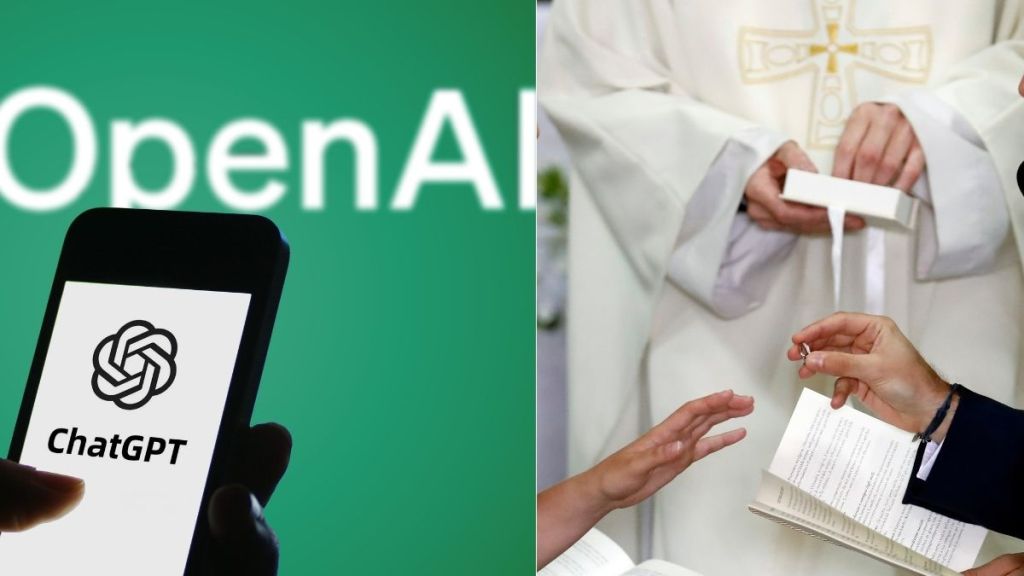
A peculiar case in the Netherlands has sparked debate about the role and dependence on technology in personal commitments. Dutch officials annulled a couple’s marriage after their ChatGPT-generated vows didn’t meet legal requirements. The decision highlights the challenges of using artificial intelligence in personal and legal contexts.
ChatGPT marriage labeled invalid under Dutch rules
A Dutch court has declared a couple’s marriage invalid, citing failure to meet the country’s legal requirements. According to Reuters, the Zwolle court of the Netherlands declared the couple’s April 2025 marriage invalid because the ChatGPT-generated vows didn’t meet Dutch legal requirements. The AI-crafted speech lacked necessary declarations, specifically the commitment to fulfill marriage duties as stated in Article 1:67 of the Dutch Civil Code. As a result, the marriage will be removed from the city registry in Zwolle.
“The court understands that the date in the marriage deed is important to the man and woman, but cannot ignore what the law says,” the judge’s ruling statement said.
For those intrigued, Article 1:67, paragraph 1, of the Dutch Civil Code states that “the prospective spouses must explicitly give their consent to the marriage” by saying two things in front of the civil registrar and the witnesses. The first being “that they accept each other as husband and wife and that they will faithfully fulfill all duties which the law connects to their marital status.”
According to Gulf News, the Zwolle-based couple wanted a laid-back civil ceremony, and therefore had asked a friend to officiate. The friend used ChatGPT to craft heartfelt personal vows. However, the AI-generated speech missed the crucial part of explicitly committing to fulfill marriage duties, as required by Dutch law.
The court’s decision revealed some of the ChatGPT-generated vows. They included promises to “support each other, tease each other, and embrace each other, even when life gets tough”. The officiant even called the duo “a crazy couple” while aiming for an informal tone.
The couple pleaded with the court to keep their original wedding date. While they cited emotional significance and their genuine intent to marry, the ruling authority stood its ground. “This means that the marriage certificate was erroneously recorded in the civil registry”, the judgment said.
Originally reported by Sibanee Gogoi on Mandatory.